The complete guide to leather backpacks shop
The Complete Guide to Leather Backpacks Shop
Finding the perfect leather backpack shop in Canada means balancing craftsmanship, style, and value, and our team is here to guide you through it. Whether you’re navigating the bustling streets of Toronto, hiking a coastal trail in Vancouver, or commuting to a Calgary office, your backpack is a daily companion. This guide cuts through the noise to help you identify shops that offer genuine quality, understand the styles that fit your life, and make an informed investment you’ll appreciate for years.
What Makes a Great Leather Backpacks Shop?
Not all online leather goods stores are created equal. A truly great leather backpacks shop distinguishes itself through a commitment to quality materials, transparent practices, and skilled construction. In the Canadian market, this also means offering reliable customer service and support within our time zones and borders. The best shops don’t just sell you a bag; they provide the story and assurance behind it.
The Importance of Material Transparency
A reputable shop will always tell you exactly what you’re buying. Look for clear specifications like “full-grain leather” or “vegetable-tanned leather.” Full-grain leather is renowned for its durability and develops a unique patina over time, telling the story of your adventures. Many Canadian leatherworkers source hides from reputable North American tanneries, ensuring a consistent and high-quality supply. Shops that hide behind vague terms like “genuine leather” often use lower-quality, processed splits. Transparency also extends to hardware (e.g., YKK zippers, solid brass buckles) and lining materials, which are all indicators of a product built to last.
Signs of True Craftsmanship
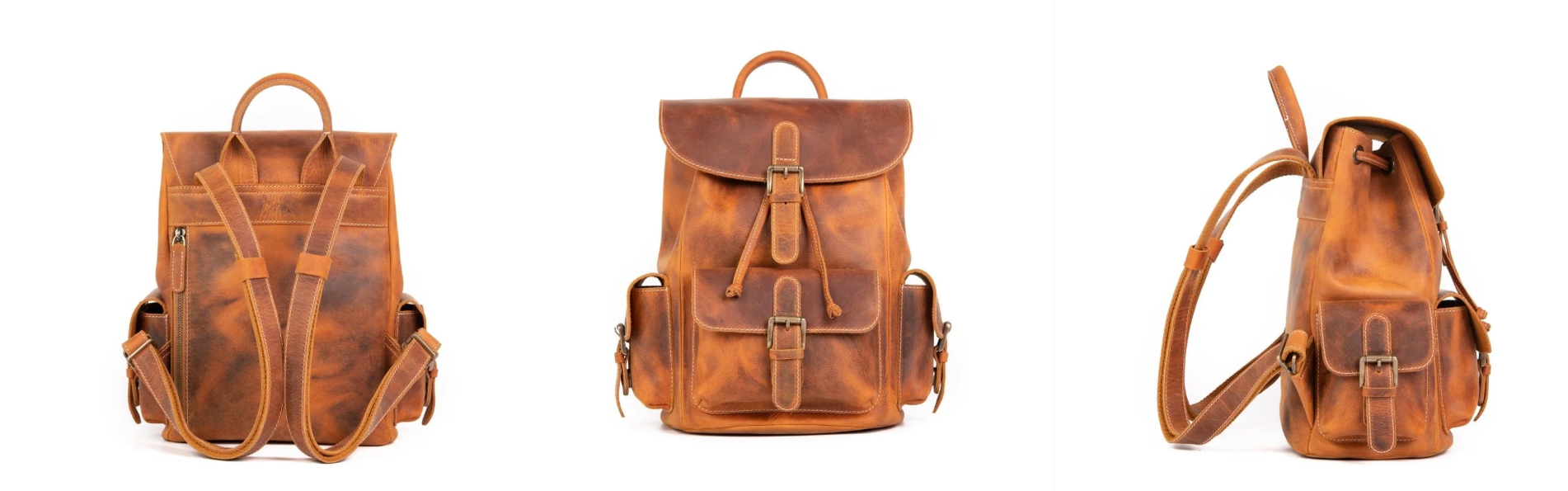
Beyond the leather itself, examine the details. Quality is found in the stitching: look for even, tight saddle stitching, which is stronger than machine stitching. Edges should be neatly painted or burnished, not left rough. Reinforcements at high-stress points like straps and buckles are a must. A great shop will showcase these details in high-resolution photos from multiple angles, proving their pride in the work. This level of craftsmanship ensures your backpack can handle the weight of a laptop, books, and daily essentials without faltering.
Comparing Styles: From Classic Rucksacks to Modern Laptop Bags
The beauty of leather is its versatility, adapting to both timeless and contemporary designs. Canadian shops typically offer a range that caters to diverse lifestyles, from the outdoor enthusiast to the urban professional.
The Heritage Backpack
Inspired by classic designs, this style often features a top flap, buckle closures, and a rounded, unstructured shape. It’s the embodiment of rugged, casual elegance. Canadian brands like Herschel Supply Co. have popularized heritage backpack styles, though many artisanal shops offer handcrafted versions with superior leather. These are perfect for weekend getaways, casual daily use, or as a statement piece that ages beautifully with you.
The Urban Commuter
Designed for modern life, the urban commuter backpack prioritizes organization and protection. Key features include a dedicated, padded laptop sleeve (often fitting up to 15-16” devices), multiple interior pockets for tech and accessories, and a more structured silhouette. Many designs incorporate sleek zipper closures, water-resistant lining, and comfortable, padded back panels and straps for all-day wear. This is the ideal choice for students and professionals navigating city transit or cycling to work.
Understanding Leather Backpacks Shop Price Ranges
Prices for leather backpacks in Canada can range from under $100 to well over $600. This wide spectrum reflects differences in materials, labour, and brand positioning. Understanding what drives the cost helps you assess true value.
What Drives the Investment?
The primary cost factors are the leather and the labour. A backpack made with premium, vegetable-tanned full-grain leather from a renowned tannery will cost more than one using thinner, chrome-tanned leather. Vegetable tanning is an eco-friendly process often used by premium artisans, taking weeks to complete and resulting in a rich, natural material. Handcrafting a bag involves dozens of hours of skilled labour, which is fairly compensated by ethical shops. Machine-made bags assembled in factories are less expensive but lack the character and longevity of a handcrafted piece.
Finding Value for Your Budget
Value isn’t about finding the cheapest option; it’s about maximizing quality and longevity within your budget. Consider this checklist for evaluating price:
- Under $200: Expect machine-assisted construction, thinner genuine or corrected grain leather, and simpler designs. Suitable for occasional use.
- $200 – $400: The sweet spot for quality handcrafted pieces. You should find full-grain leather, solid craftsmanship, and good design from smaller Canadian artisans or direct-to-consumer brands.
- $400+: The premium tier. This features the finest full-grain or exotic leathers, impeccable hand-stitching, unique designs, and often custom options from master craftspeople.
How to Navigate Leather Backpacks Shop Reviews
In an online world, customer reviews are your most powerful research tool. However, learning to separate genuine feedback from misleading posts is crucial before you commit to a purchase.
Spotting Genuine Customer Insights
Look for detailed reviews that mention specific aspects like break-in time, comfort after long wear, or how the leather has aged after six months. Be wary of overly generic, glowing reviews that sound similar. Trust platforms that verify purchases (like Shopify stores often do). Pay special attention to how the shop responds to negative reviews—a professional, solution-oriented response is a very positive sign. Seeking out reviews from other Canadian buyers can also provide insights into shipping speed and customs/duty experiences.
The Power of Visual Reviews
A picture is worth a thousand words, especially for a tactile product like leather. Customer photo reviews are invaluable. They show you the true colour of the leather in different lights, the real-world scale of the bag on a person’s back, and the developing patina on used bags. Shops that encourage and display these photos are confident in their product’s real-world appearance and performance.
Your Checklist Before You Buy Leather Backpacks Shop
Before you click “add to cart,” run through this final checklist. It covers the practicalities that ensure a smooth purchase and a lasting relationship with your bag.
Logistics & Support
Always confirm the shop’s policies for Canadian customers. Key questions to answer include: Does the price include taxes and duties, or are they calculated at checkout? What are the shipping times and costs within Canada? What is the return or exchange policy—is there a restocking fee? Does the product come with a warranty against manufacturing defects? A shop that stands behind its products will have clear, fair policies on all these fronts.
Long-Term Care Considerations
Leather is a natural material that thrives with proper maintenance. A proper care routine using conditioners like mink oil is essential for Canada’s varied climate, from dry winter interiors to humid summer days. Check if the shop sells or recommends a specific leather conditioner or care kit. Do they provide clear care instructions? A shop invested in the lifespan of its products will educate you on how to preserve and protect your investment.
Frequently Asked Questions
How do I know what size leather backpack I need?
Consider your daily carry. Measure your laptop if you need a sleeve. Most shops provide dimensions in litres (capacity) and inches/centimetres (height, width, depth). Think about whether you need a bag for just a laptop and notebook, or for gym clothes, a lunch, and other daily essentials. When in doubt, a 20-25L capacity is a versatile mid-size for most commuters.
Will my leather backpack get damaged in the rain or snow?
High-quality full-grain leather is quite resilient to moisture. A light rain or snow will not ruin it; in fact, it can contribute to the patina. However, you shouldn’t submerge it or let it stay soaking wet. If it gets wet, let it air dry naturally away from direct heat. Pre-treating with a leather protector or conditioner (like mink oil) will enhance its water resistance, which is a smart step for Canadian weather.
What’s the difference between “full-grain” and “top-grain” leather?
Full-grain leather is the entire top layer of the hide, including all the natural grain and imperfections. It’s the strongest and most durable type and develops the best patina. Top-grain leather is slightly sanded or buffed to remove surface imperfections, making it more uniform but slightly less durable than full-grain. Both are quality materials, but full-grain is generally considered the premium choice for heirloom-grade bags.
How long does it take for a leather backpack to break in?
The break-in period depends on the leather’s thickness and type. Stiffer vegetable-tanned leather may take a few weeks of regular use to soften and mold to your body. Softer, oil-tanned leathers may feel comfortable almost immediately. The breaking-in process is part of the joy, as the bag becomes uniquely shaped to your movements.
Do Canadian leather shops offer repairs?
Many, especially smaller artisans and craft-focused brands, offer repair services for their products. This can include restitching, replacing hardware, or other fixes. It’s a hallmark of a brand that builds for longevity. Always check a shop’s website for their specific repair policy before purchasing.
Ultimately, the right leather backpack shop offers not just a product, but a durable companion for Canadian adventures, backed by quality you can trust. By focusing on material transparency, true craftsmanship, and thoughtful design that fits your lifestyle, you’re investing in a piece that will function beautifully and look even better with age. We hope this guide empowers you to find the perfect shop and the perfect backpack with confidence.